Follow the real production of The Last Order through story, characters, storyboard, video, sound, and editing to finish a playable 30-second vertical episode.
01
Story and script
Choose the format and duration, then convert the idea into visible actions.
STEP 1 · SCOPE
Keep production small
The Last Order is a 30-second, 9:16 urban mystery with one visible actor and one convenience-store set.
STEP 2 · SCRIPT
Lead with conflict
At 2:13 AM, Lin Xia receives an order addressed to her missing sister. An old phone in the bag displays: “Little sister, don't turn around.”
Write a 30-second, 9:16 urban mystery. Protagonist: night clerk Lin Xia. Use one visible actor, one location, and six edit shots. Show an anomaly in the first three seconds. Give every shot one action. End with “Little sister, don't turn around.” Output character, shots, action, dialogue, sound, and duration.
Gate: the sequence still reads without sound, and every emotion has been converted into a visible action.
DeliverStory brief, six-shot script, dialogue and sound list.
02
Lock characters and the set
Approve one character master and fixed spatial anchors before generating shots.
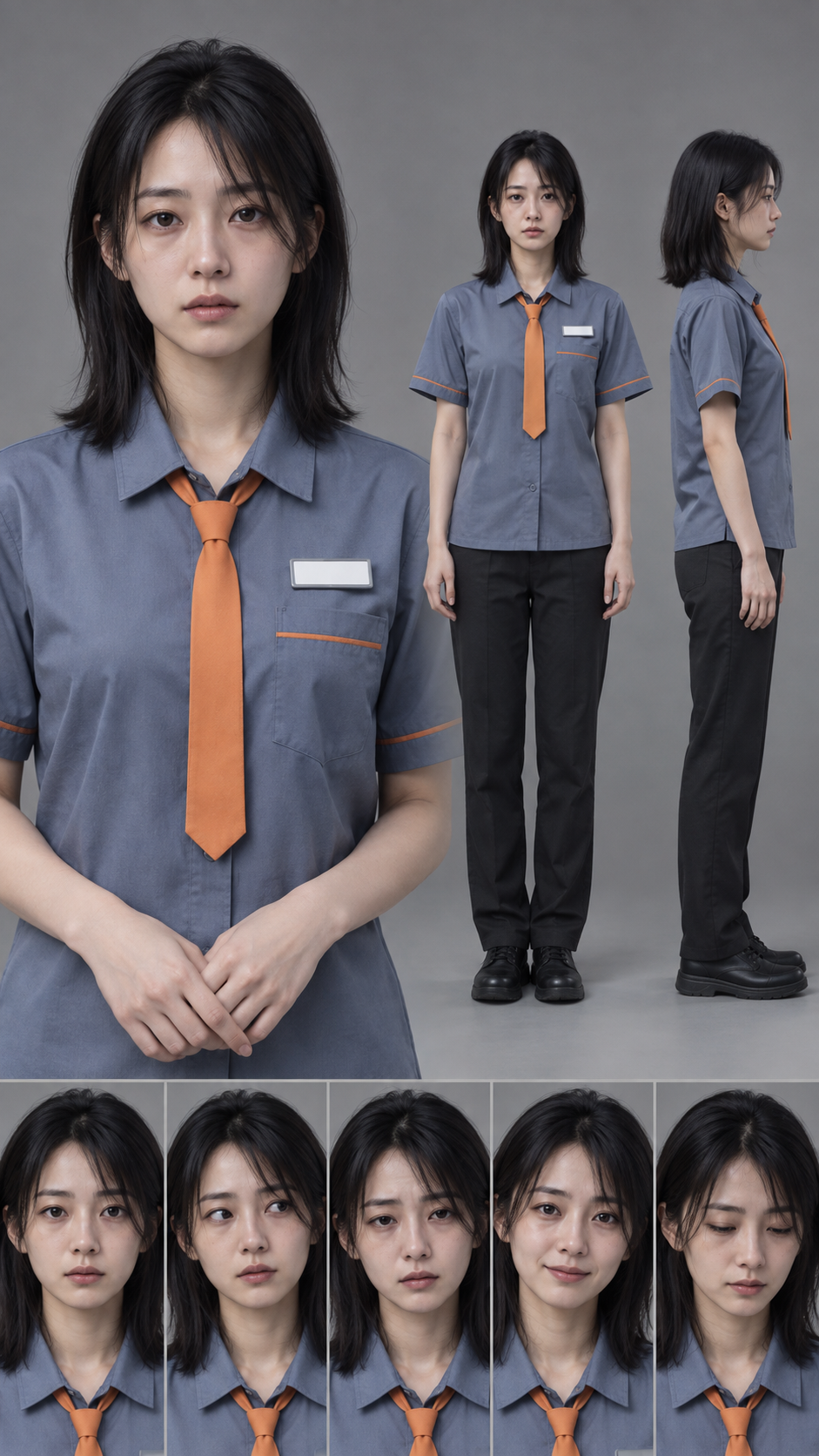
25-year-old Chinese woman, narrow oval face, almond eyes, shoulder-length straight black hair, gray-blue convenience-store uniform, slim orange tie, silver name badge, tired but alert, realistic cinematic style, neutral background, no text, no handheld objects.
Character masterCheckout and cold ceiling lightGlass door and wet streetBag and old phone
Gate: face, hair, uniform, badge, checkout, refrigerators, glass door, and key-light direction remain recognizable.
DeliverCharacter master, set anchors, and prop-state list.
03
Storyboard and keyframes
Map six edit shots into three ten-second generation segments to control cost while preserving rhythm.
Edit shots
Visible change
Generation segment
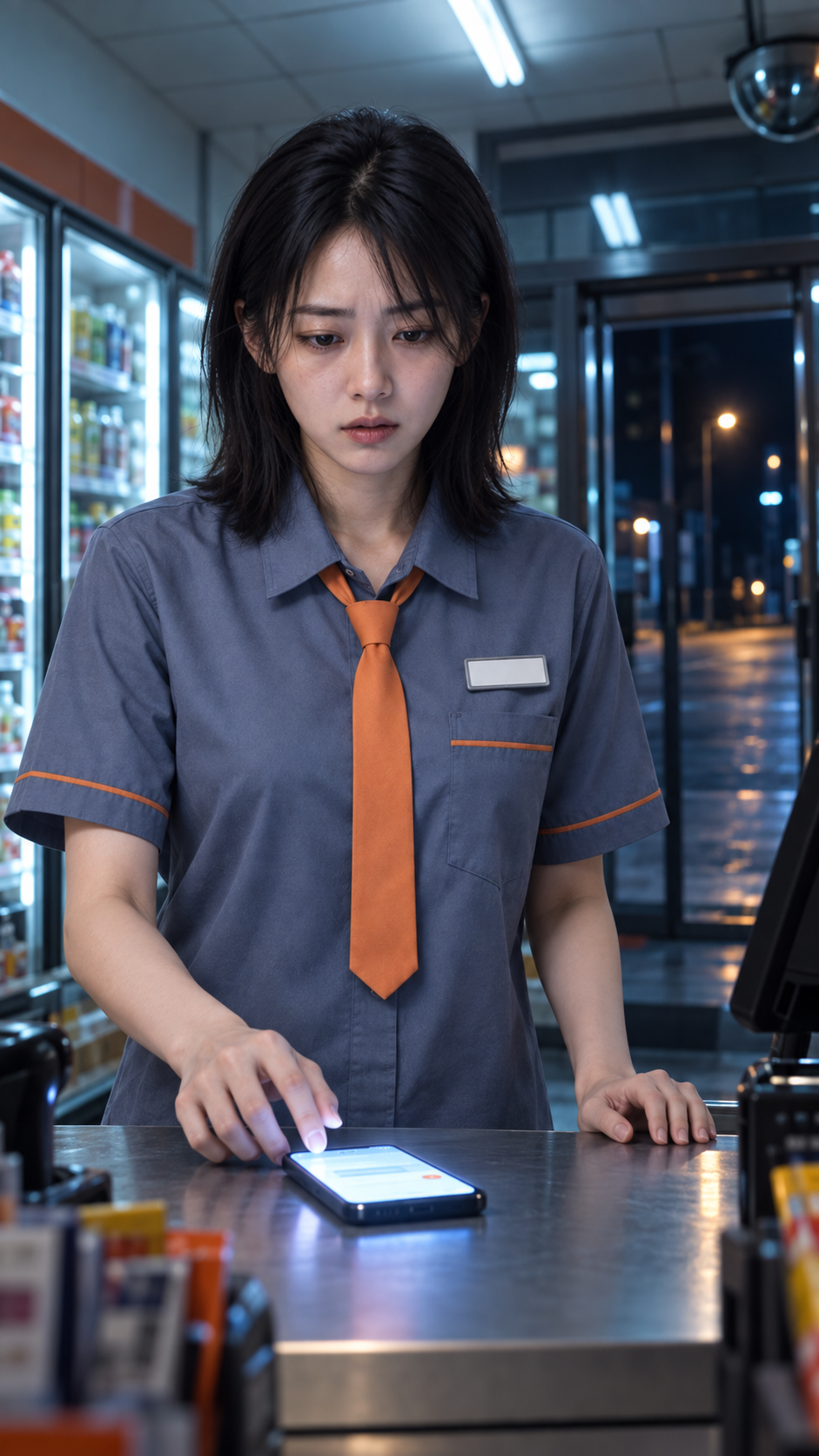
01–02
Order alert → recipient close-up
01 Abnormal order
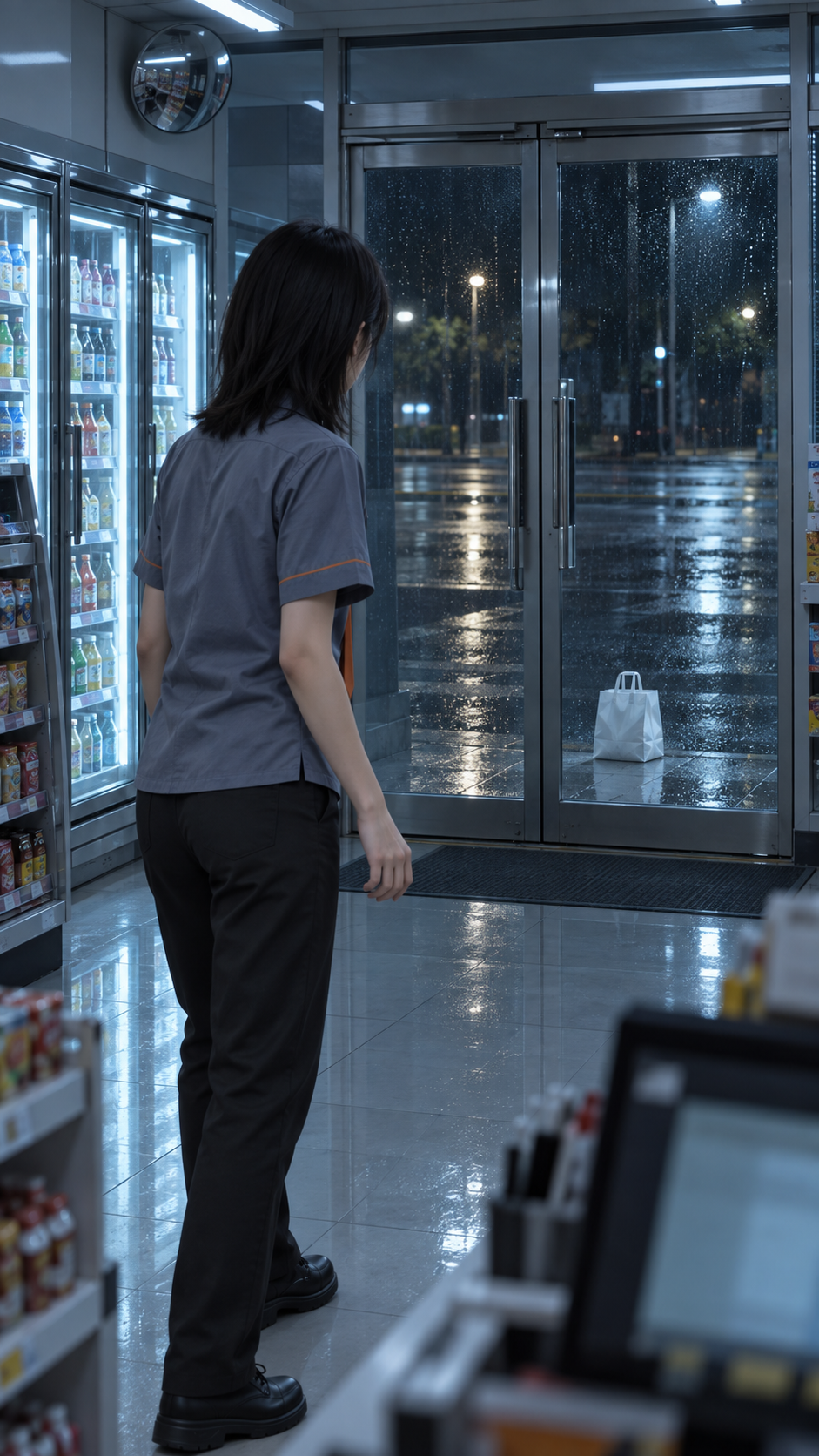
03–04
Bag outside → Lin Xia approaches
02 Bag at the door
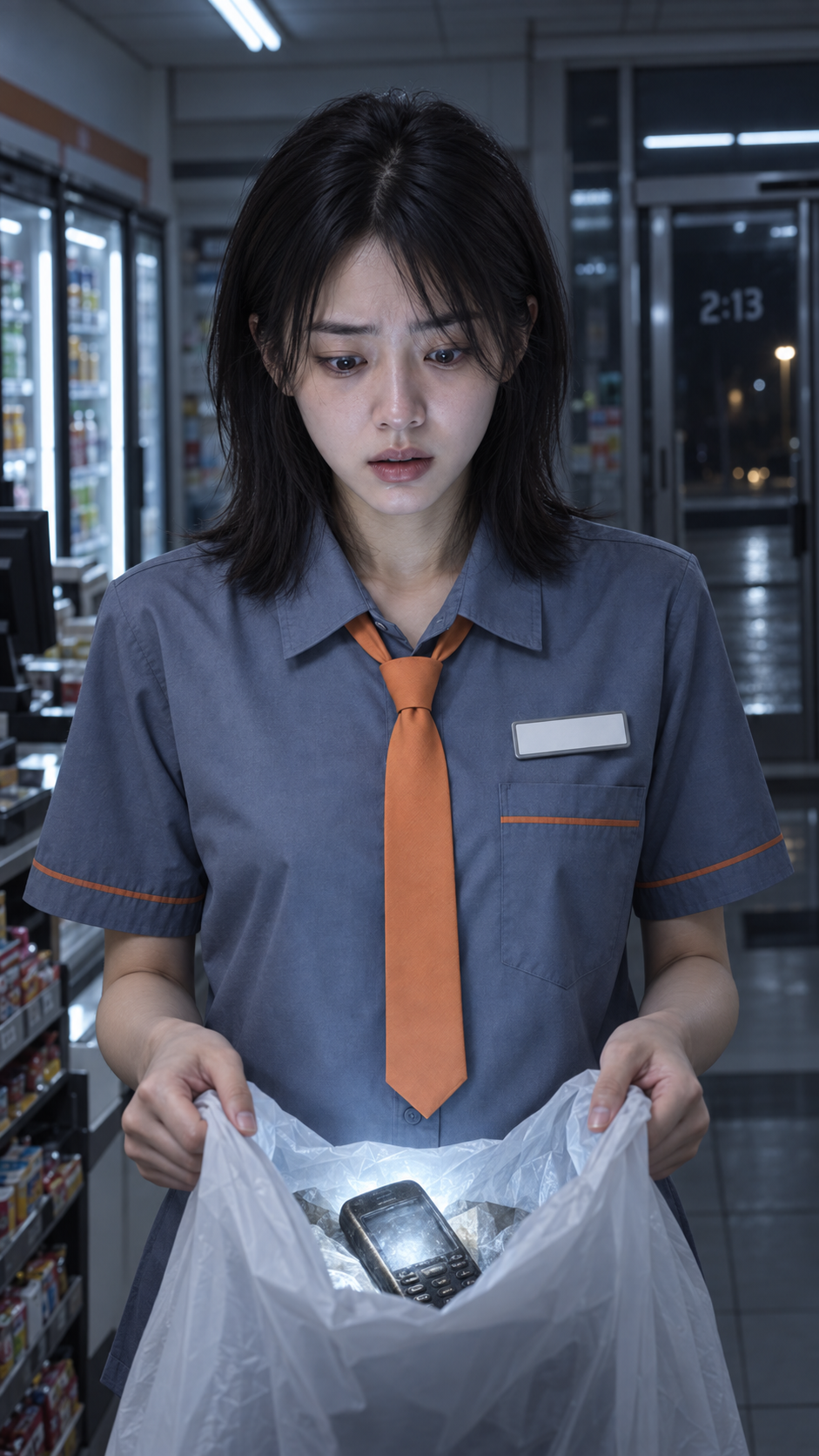
05–06
Old phone lights → store lights fail
03 Warning
Locked character description + set anchors + one starting action + expression + framing and composition + light and palette + vertical 9:16 + preserve face, hair, costume, and background layout.
Gate: repair faces, hands, text, and props in the still frame before paid video generation.
DeliverShot table, three approved first frames, and segment map.
04
Generate and repair video
Describe only what changes next. Give each segment one primary performance and restrained camera movement.
Lin Xia lifts the white delivery bag. The old phone inside suddenly vibrates and lights up. She reads the message and holds her breath as the fluorescent lights behind her switch off from back to front. Very slow push-in. Preserve her face, hair, uniform, and store layout.
01 · Abnormal order · 10.125 sec02 · Bag at the door · 10.125 sec03 · Warning · 10.125 sec
Real repair: an earlier render used the wrong spoken line and screen text, so only the faulty segments were regenerated. Add exact screen copy in post when generative text is unstable.
DeliverThree validated MP4 segments and a generation log.
05
Dialogue and sound
Dialogue carries information, ambience makes the room believable, and effects mark events.
Layer
Example
Check
Dialogue
“Impossible…”
Age, emotion, and timing fit
Ambience
Refrigerator hum and rain
Continuous across cuts
Effects
Order alert, old ringtone, electrical fail
Land exactly on action
Music
Optional low suspense bed
Never masks speech
Gate: the escalation makes sense with eyes closed. Confirm rights before using cloned voices or music.
DeliverVoice profile, dialogue files, ambience and effects list.
06
Edit, subtitle, and deliver
Cut for information, align sound before decoration, then check the finished episode on a phone.
Order the three segments and remove unstable head and tail frames.
Align dialogue and effects, generate subtitles, then verify every name, number, and screen message.
Normalize color and audio. Keep this case's native 672×1216 master; use 1080×1920 as the final 9:16 delivery target when appropriate.